A well planned paver patio area does more than include a place to sit. In Pasadena, it anchors life outside, fixes tricky grading or drain concerns, and enhances resale appeal in a market where outdoor spaces carry real weight. The best layout welcomes you out for coffee at daybreak, turns dinner into an unwinded routine, and keeps hosting effortless even after the lights come on and the temperature dips. The wrong one ends up being a heat trap in August, slick in January, and a headache when seasonal rains expose bad drainage. Style and installation matter, therefore does picking a team that understands regional soils, microclimates, and architectural character.
Over 20 years of hardscape style in Pasadena, I have seen how subtle shifts in pattern, border width, and grade can make the distinction in between good and fantastic. I have likewise rebuilt outdoor patios that failed in three years since the base was thin or the drainage had no place to go. The goal here is to share essential decisions, trade offs, and a practical course from vision to a paver patio that looks customized and strives year after year.
What a Pasadena patio area requires to do well
Pasadena has warm summers, cool nights, and bursts of winter rain. That climate rewards products and designs that remain comfy underfoot, drain naturally, and withstand color fade. The city also has an abundant architectural mix, from Craftsman bungalows to mid century lines and contemporary tuck unders in the foothills. A paver patio area should match the home's vernacular without copying it too literally.
That is where customized designs shine. A long rectangle-shaped dining patio behind a simple cattle ranch style house might call for a tidy running bond, a soldier course border, and a mild 1 to 1.5 percent slope away from the structure. A 1910 Craftsman under fully grown camphors might look finest with warm blends, a herringbone field for motion, and clipped radius edges to work around roots. On modern-day homes with clean stucco planes, extra-large porcelain pavers set on pedestals can develop strong geometry with very little grout lines and a cooler touch in summer.
Local experience aids with the invisible information too. Much of Pasadena sits on compressed alluvial soils, but the foothill areas carry decomposed granite pockets and extensive clays. Those respond in a different way to moisture and require various base techniques. A skilled paver specialist in Pasadena will not presume the base specification for a beach town works the same here.
Layouts that include function and personality
Custom does not mean fussy. It indicates deliberate. An outdoor patio should align with how you live and the restraints you can not change. Common restraints consist of existing trees, energies, narrow side yards, and rigorous HOA line of visions. The best styles lean into those constraints to develop distinct zones and natural circulation.
I like to begin by mapping use cases over a plan. If you host frequently, plan for a dining zone within 10 to 15 feet of the kitchen door to keep traffic effective. If you grill, tuck the island where smoke wanders away from doors, and leave 36 to 42 inches of clearance on working sides. If you choose quiet mornings, carve out a small balcony a few steps off the primary pad, possibly turned 15 degrees to capture winter sun and cut summer glare.
Borders and inlays fit Pasadena architecture well. A contrasting border manages the eye and conserves you from awkward cut slivers at the edges. Inlays can outline a fire pit circle or define where a pergola lands. Keep inlays limited. One a lot of accents turns a patio into a patchwork. I usually run a 6 to 8 inch border in a darker tone, with an 18 to 24 inch apron at entries where foot traffic concentrates.
Curves are useful for softening long fences or hedges. Real radii need appropriate cuts and client installation. If you choose a curve, make it intentional, not a wobble. On compact lots, shallow angled aspects provide a similar feel with cleaner cuts and less waste. Retaining steps built by a maintaining wall builder in Pasadena can manage a 2 to 4 foot grade modification without feeling like a fortress when the block option and cap information match the home.
Materials that hold up in heat and rain
Pavers are available in concrete, clay, porcelain, and quarried stone. Each has a place in Pasadena hardscape design.
Concrete pavers control for good reasons. They offer interlocking strength, textured surfaces, and a scheme broad adequate to pair with Spanish revival stucco or steel and glass modern. Try to find integral color blends that withstand UV fade, and favor textures with subtle clefts that limit glare. A number of the much better lines satisfy ASTM C936 with compressive strengths around 8,000 psi. With sealers, expect 8 to 15 years between recondition cycles.
Clay brick pavers fit historical homes and compact patios. They remain cool to the touch, though their narrow format means more joints and more detailed cuts at edges. Color runs through the body, so chips are less conspicuous.
Porcelain pavers provide a modern-day stone look with low water absorption and exceptional stain resistance. On raised terraces, pedestal systems allow fine height changes and simple access to utilities listed below. Completely sun, pick finishes ranked as slip resistant when wet.
Natural stone in the San Gabriel Valley usually implies limestone, quartzite, or travertine. Stone looks timeless, but variation can challenge tight borders and specific patterns. Some lighter limestones can engrave or spall under pool chemicals. If you choose stone and want crisp geometry, think about determined porcelain that mimics limestone tones with a predictable thickness.
Permeable pavers have actually earned a location in Pasadena projects with tight drainage constraints. They allow water to filter down to a recharge bed instead of shedding it toward the neighbor's wall. They do require a much deeper, open graded base and occasional vacuuming to keep the joints porous. On small urban lots, they can be the distinction between approval and redesign.
Soil, base, and the information you rarely see
Failures hardly ever begin at the surface. They start with a thin base, poor compaction, or water trapped under the field. In Pasadena, I go for an excavation deep enough to permit 4 inches of compressed Class 2 base for light duty patios, and 6 to 8 inches where ovens, health clubs, or cars will land. In clay pockets or under heavy functions, geotextile fabric helps different fines from the base course.
Compaction is not a guess. A plate compactor ranked for a minimum of 3,000 pounds of centrifugal force, run in overlapping passes, gets you to 95 percent relative compaction more reliably than a little homeowner system. A clever installer checks the base with a straightedge and spots low locations before bed linen sand decreases. Set slope at 1 to 2 percent far from the house, determined at the base, and maintain it through the bed linen layer and the surface. Plane changes in the top without slope lined up below usually telegraph as puddles after the first rain.
I choose an inch of cleaned bed linen sand or great 3/8 inch chip for a setting bed. Polymeric sand in the joints, triggered and reactivated correctly, helps lock pavers and control weeds. Edge restraints matter. Concrete toe beams, hidden steel edging, or integrated curb units keep the field tight with time. Avoiding restraints is a common do it yourself error that shows up as roaming borders within a year.
Drainage is not a line product, it is the spine
I have ripped out gorgeous outdoor patios because the water had nowhere to go. The unexpected part is that the repair is hardly ever remarkable. A half percent more slope, a discreet trench drain, or a gravel French drain tied to an existing discharge can save a style that would otherwise suffer every rainy season.
On tight lots with raised planters, weeper holes in the maintaining walls, well put to prevent staining and backed by gravel and material, eliminate hydrostatic pressure. On valley lots where next-door neighbors sit slightly lower, you may need to run a strong drain to the street with a curb core. That course must be designed and permitted, and frequently the distinction in between a smooth approval and a stop order is generating a drain professional in Pasadena early. Yard drain in older neighborhoods can be quirky, with clay tile antiques and undocumented incorporate. A video camera evaluation before you complete grades can save a second mobilization.
When using permeable systems, keep roofing system downspouts out of the patio field unless the base is created to take the load. A deluge from a 1,000 square foot roof can overwhelm a small outdoor patio's percolation capacity.
A custom layout that makes its keep
The expression custom design gets tossed around. To me, it means the plan aligns usage, aesthetic appeals, and performance. It also suggests the patio does more than hold furnishings. It needs to do quiet work too, by directing footsteps, hiding watering valves, and soaking up small grade shifts so that floorings inside the house and paving outside checked out level to the eye.
Consider splitting a large outdoor patio into connected pads, each turned by a few degrees or separated by a planting strip. That technique decreases the visual bulk and improves drainage by producing brief, foreseeable planes. Bands of direct pavers can nudge visitors towards steps, while a change from herringbone to ashlar at the barbecuing zone signals function without a signpost.
I as soon as worked on a Madison Heights yard where the owners desired a large entertaining location but feared losing their garden feel. We broke the 600 square foot target into a 360 square foot dining court, a 160 square foot lounge pad by the fire pit, and an 80 square foot early morning balcony by the kitchen area. The joints lined up, but the fields switched pattern and orientation to produce subtle limits. We tucked a slot drain in between the dining piece and a herb strip, planted dry spell tolerant rosemary and thyme, and nobody notifications the drain unless I point it out. Four years later on, the polymeric joints are tight, and the owners host two dozen individuals without moving a single planter.
Planning fundamentals before you break ground
You do not need an architecture degree to prepare a strong patio, but a little structure assists. Before you call a hardscape builder in Pasadena or sketch a pattern, sit with the property at various times of day, and attempt the sight lines from inside your house. Shade patterns in summer and winter can alter comfort by 10 degrees. Keep in mind where your pet runs and where kids crossed the backyard. Then catch the essentials.
- Measure the space, doors, and clearances. Draft a simple plan to scale. List the functions you desire and rank them. Dining, lounging, cooking, fire, play. Identify sun, shade, and wind. Mark where winter season sun strikes in between 9 and 3. Pinpoint drain courses, downspouts, and any low spots after rain. Flag energies, roots, HOA or city problems, and any height limits.
These five products form the short you show an outdoor patio contractor in Pasadena. A great one will improve it with you, not replace it.
How installation unfolds when done right
Every installer has a rhythm. The greatest projects follow a clear sequence and do not cut corners to chase a day. Here is the lean version of the procedure that tends to produce outdoor patios that last:
- Mobilize, secure surrounding finishes, and set recommendation elevations with string lines. Excavate to depth, remove organics, install geotextile if required, and place base. Compact in lifts, form the base to the style slope, and talk to a screed. Install restraints, location bedding layer, lay pavers to pattern, and cut edges clean. Compact the field, sweep polymeric sand, activate, and surface with punch list.
On a 400 square foot outdoor patio, this can take 3 to 6 working days depending upon access, saw cuts, and weather. Quick is not the goal. Predictable and accurate is. When you hear a team running the compactor more than as soon as and see them reconsidering slopes, you are most likely in good hands.
Integrating landscape, grass, and walls
An outdoor patio does not live alone. It touches beds, grass, actions, and walls. Done thoughtfully, those connections make the area feel like it has constantly been there.
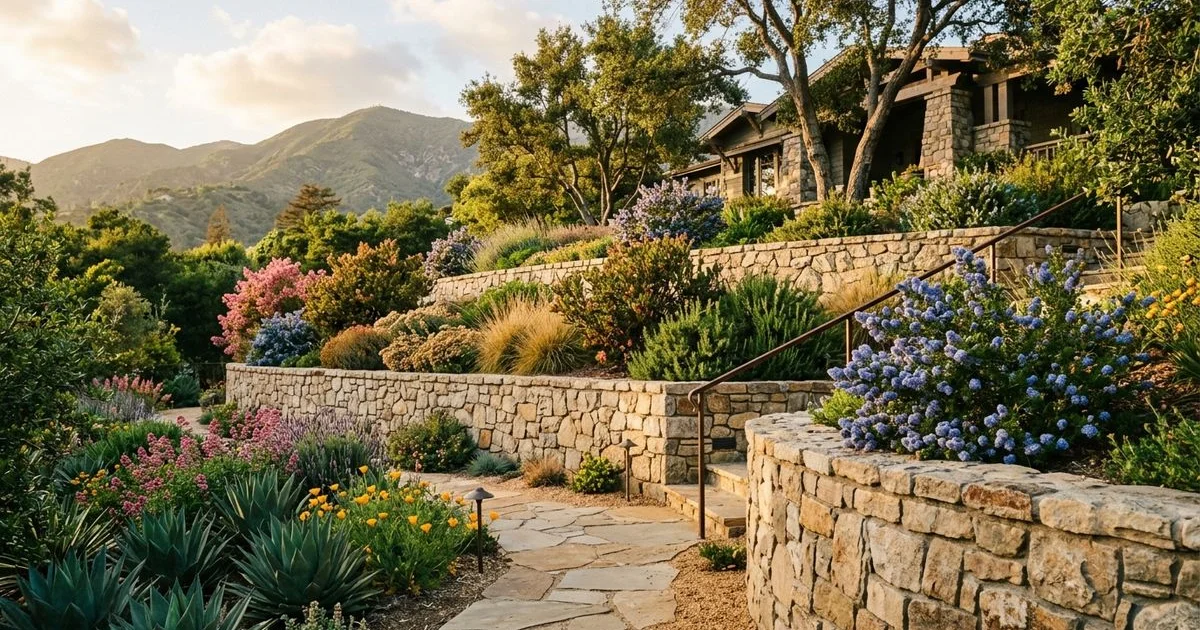
Backyard landscaping in Pasadena frequently favors layered plantings that handle heat and look alive in January. Drought tolerant garden combinations can be vibrant and textural, not just gravel and agaves. Think Anigozanthos, Salvia, Westringia, and olive for structure, with succulents where hot shown heat would punish softer plants. Xeriscape landscaping can meet water spending plans without reading as arid when you pair deep mulch, subsurface drip, and shade trees that will develop into a canopy.
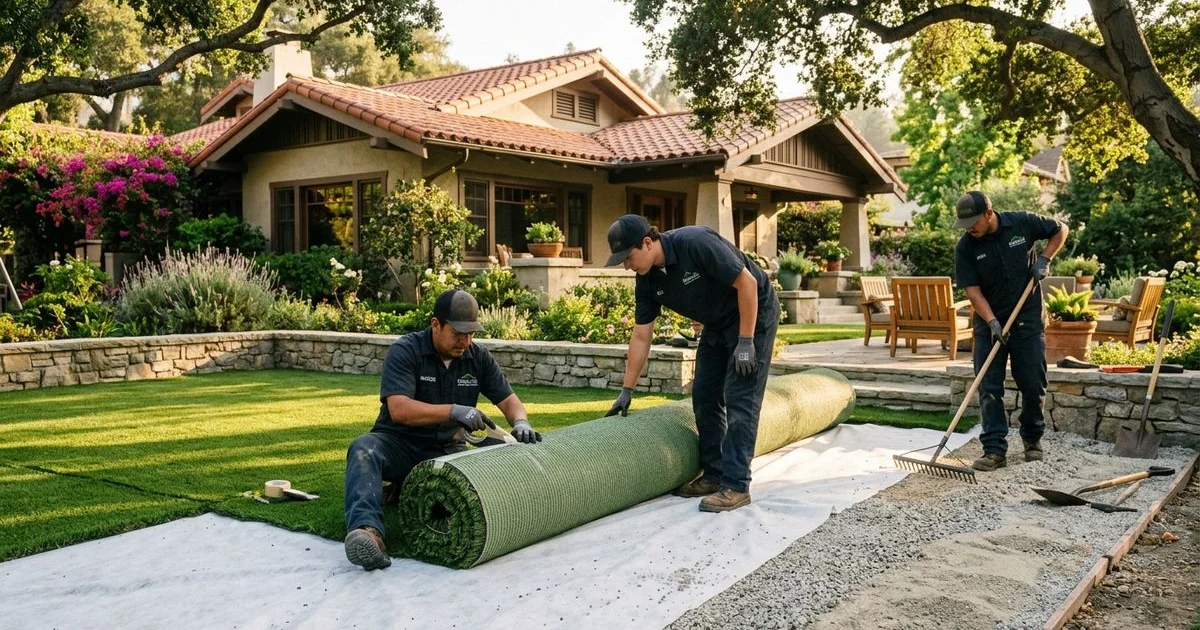
Artificial grass in Pasadena has its place, particularly in small courtyards that rarely see rush hour. Synthetic grass next to a paver field can make a family pet zone easy to tidy and keep the outdoor patio looking sharp. The secret is a correct base and drain mat so it does not smell or maps.app.goo.gl slump. If you lean that direction, select an item with a reasonable thatch and prevent the bright, neon greens that call attention to themselves. Artificial turf setup in Pasadena has enhanced significantly over the last years, however heat can still integrate in full sun. Plan shade.
Retaining wall installation enters into play on sloped lots. Usage walls to carve flat pads and back them with proper drainage. A maintaining wall contractor in Pasadena will size geogrid and base to the soil conditions and load above. Where possible, balcony walls into planters to break up height and mix the structure with the garden. Caps that match or complement the paver border connect the elements together.
Front lawn landscaping can gain from small paver terraces at the entry, framed by low walls or seat walls. They extend the social life of a street and help a traditional home feel grounded. Garden design in Pasadena rewards context. On a Craftsman, a clay brick ribbon in the pathway nods to period details without turning the yard into a style park.
Lighting, fire, and the luxury layer
Lighting is the peaceful hero of luxury outside living in Pasadena. A handful of warm, low glare fixtures along borders and steps make the patio comfy and safe without the cruelty of a flood light. Incorporate circuitry throughout hardscape installation, not after, so channels and junctions conceal under the field and stub out in the right places.
Fire functions extend the season and anchor conversation. Gas is clean and controllable. Wood is primal however unpleasant, and some HOAs restrict it. Seat walls 18 to 20 inches high ringed around a low fire bowl keep sight lines open. If you plan an outside kitchen, support the island by itself piece or footings, independent from the pavers, to prevent telegraphing any movement. This is where a skilled outside living contractor in Pasadena, such as Ridgeline Outdoor Living, earns their keep. Incorporating gas, electrical, drainage, and load courses takes design coordination and field sense.
Luxury outside living does not require exotic products. It needs coherence. Align joints between patio areas and actions, keep cap stones constant, and resist the urge to mix a lot of textures. 2 or three finishes, repeated with discipline, feel richer than five competing voices.
Maintenance that respects the materials
Paver patio areas are forgiving. If a paver discolorations or chips, you can replace it. That does not imply they are maintenance complimentary. Expect to sweep polymeric sand back into joints where it settles in the first months, and think about a light wash in spring. Sealers aid in high traffic or under messy trees, however not all pavers need them. If you do seal, wait until the patio area has actually gone through a couple of damp dry cycles to let efflorescence program and dissipate. A breathable sealer with UV blockers can lower fading on darker tones.
Weed control starts with good edge restraints and joint sand. If you see moss or algae in shaded, damp corners, a trim to enhance airflow and a periodic diluted cleaner resolves it. Prevent pressure cleaning at close quarters, which can dislodge sand and pit surfaces.
Permitting, neighbors, and great process
Most patio areas in Pasadena fall under nonprescription allows or do not need authorizations if they remain separated and low. As soon as you include a roofed structure, gas, or electrical, allows use. Setbacks and lot coverage rules vary in the hillside areas. If you are in an HOA, expect a review for colors, products, and heights that may show up from the street.
Before demolition, call for utility locates. Old homes can conceal unmarked watering mains, abandoned gas lines, or shallow electrical go to sheds. I have seen a task lose a week to a severed, undocumented conduit set two inches below grade along a fence line. A client walk through with the client on the first day, sharp paint on the ground, and a couple of exploratory digs avoid that type of surprise.
Costs and where the money goes
Numbers vary with gain access to, helpful resource demolition, cuts, and features, however a quality paver outdoor patio in Pasadena typically lands in the 25 to 45 dollars per square foot variety for an uncomplicated field with standard borders. Complex patterns, porcelain on pedestals, heavy saw work, seat walls, and incorporated drainage can push totals into the 60 to 120 dollars per square foot range. Outdoor cooking areas, gas lines, and lighting are different line items and can rival the patio area itself.
If you need yard drain improvements or retaining work, budget plan for those before you choose that inlay or imported cap. Water management is worth. Fancy borders are taste.
On resale, agents in the area regularly keep in mind greater purchaser engagement when the yard reads as a finished space. You are unlikely to see a dollar for dollar return on every upgrade, however a clean, generous outdoor patio with smart circulation can shorten time on market and lift deals in the right neighborhoods.
Common risks and how to prevent them
The most regular mistakes are predictable. Setting the patio area too high against the threshold robs you of a slope to shed water. Stuffing too much program into insufficient area yields courses too narrow to use. Selecting a pattern that fights the home's lines looks loud without meaning to. Skipping edge restraints or undersizing the base conserves a few hours and expenses you hundreds later.
The remedy is not more spending plan. It is a group that appreciates fundamentals. When you veterinarian a hardscape business in Pasadena, inquire about compaction targets, base depth, and drain courses. Stroll a task they finished 2 or 3 years earlier. Look at edges, look for settled joints, and note how water moves after a tube test. A business proud to be the best landscape professional in Pasadena need to enjoy to let their work speak.
Choosing the ideal partner
Plenty of companies can set pavers. Less can design a layout that reads as inevitable, install it with discipline, and incorporate it with the landscape. Look for a paver contractor in Pasadena with a portfolio that shows range and restraint. Ask who will be on website daily and who will make choices when the crew discovers a root or pipe where the plan reveals tidy soil.
If you choose a single point of obligation, search for an outdoor living style and develop team. A group like Ridgeline Outdoor Living, which deals with patio style in Pasadena, drainage, maintaining walls, and planting under one roof, lowers the danger of finger pointing between trades. Whether you hire them or another contractor, insist that the style be recorded to a level where slope, edges, base, and pattern are clear, not simply a quite rendering.
Verify licensing and insurance, and confirm they are comfy with Los Angeles County and City of Pasadena requirements. If you are including synthetic grass, xeriscape, lighting, or walls, make certain those scopes are consisted of and collaborated. A coherent strategy beats a stack of detached quotes every time.
When an outdoor patio becomes your preferred room
The best compliment I hear is that the outdoor patio steals time from the sofa. When the design fits, the grade feels easy underfoot, the breeze moves through, and the lines echo your house, you drift outside without believing. You roll out a yoga mat beside a low planter. You plate dinner on the grill island and slide into chairs that do not require to be mixed to find shade. You light the fire and the action lights catch the cap edges just enough to guide the method. That is the bar.
Pasadena uses the climate, architectural richness, and plant combination to support that bar almost all year. With a thoughtful plan, a home builder who respects basics, and a few exact moves in design and drain, your paver patio area can add value and genuine flexibility, not just square video. Whether the job starts with backyard landscaping, garden landscaping, or a concentrated hardscape installation in Pasadena, set the functional spine initially. Then layer the texture, color, and light. You will feel the distinction in how voluntarily you head outside, therefore will anybody who visits.
Business Name: Ridgeline Outdoor Living
Address: 845 E Walnut St, Pasadena, CA 91101, United States
Phone: (626) 469-5822
Ridgeline Outdoor Living
Ridgeline Outdoor Living is a Pasadena-based landscape design-build company serving Greater Los Angeles with custom outdoor living, hardscape, and drought-tolerant landscape solutions. The company specializes in patios, retaining walls, outdoor kitchens, drainage, hillside projects, and turnkey landscape construction, handling projects from design and permitting through final build and warranty.
845 E Walnut St, Pasadena, CA 91101, USA
Business Hours:
- Monday – Saturday: 8:00 AM – 6:00 PM
- Sunday: Closed
Follow Us: